
When you are working on woodwork or construction You will need different kinds of screws. Each screw can serve a specific function and shouldn’t be utilized to replace each other. Selecting the appropriate tools and materials is essential as it could weaken the structural strength. Today, we’re going to discuss wood screws and lag screws. We’ll discuss the differences between them.
Lag Screw Vs Wood Screw: Pros and Cons
What is Lag Screw?
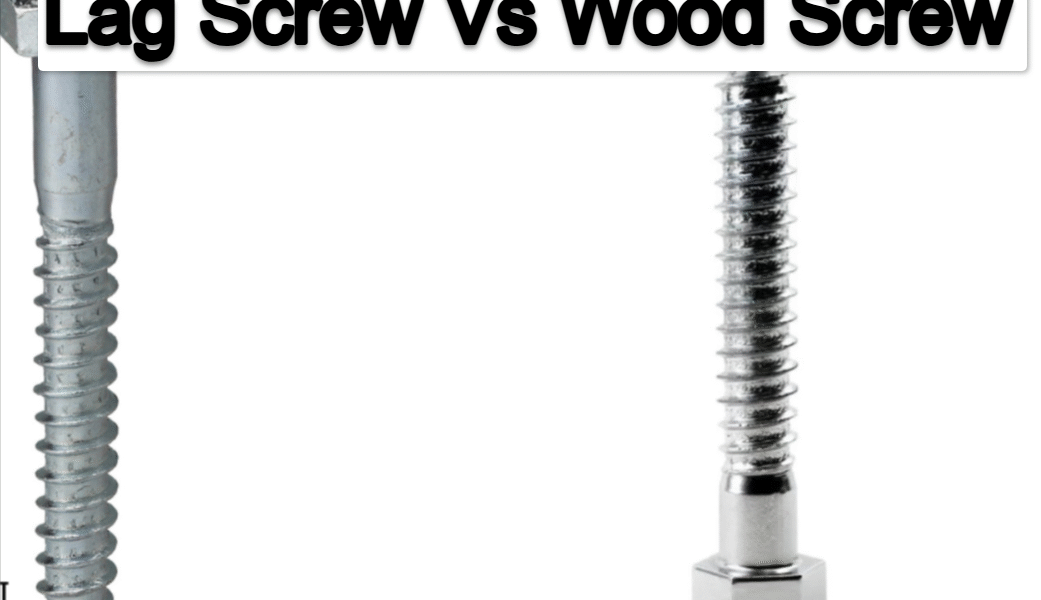
Lag screws, sometimes referred to as lag bolts are durable fasteners specifically designed to work with wood. The lag screw features an hexagonal head that can be tightened by the use of a wrench and it has a great hold power. The lag screw pierces the substance because it has sharp, yet coarse teeth. Furthermore it is possible to create solid joints using Lag Screws. They are ideal for fixing large beams, or for attaching bulky things to the wood.
Advantages of Lag Screw
- Capacity of Load Bearing The capacity for bearing load for the lag screw can be high. It is possible to select the bigger size of the screw in case the load is heavy. The nut inside the lag screw functions as counters in order to support the load of beams.
- The Structural Applications – If you are using the latch screw, you can be certain of structural strength. There is no movement in the beams when you use a lag screw employed properly. It is not the case with the wood screw as there are no nuts on wood screws.
- Resilient to Rust Lag screws are coated and galvanized to make them rust-proof. Therefore, even if water gets into the area, the lag screw won’t fail and will keep you secure.
- Long-Lasting A lag screw is able to withstand the highest tension and stress levels. In this case they’re extremely slow due to wear and tear. Chemical compounds can be used to ensure that the lag screw will last longer.
- Reduces the risk An lag screw is utilized together with the nut, decreasing the possibility of the screw bursting all by itself. The nut pulls and secures the screw at the correct force, thereby reducing the possibility of failure that is critical.
Disadvantages of Lag Screw
- It is difficult to work with – Keep in mind it is a fact that the lag screw is supplied with the nuts. In this scenario it is necessary to have enough space for both beams. If you’re not able to work in the space, or the space is small, it’s not easy to use the equipment.
- Drilling required If you are using the lag screw, then it is necessary to drill holes first. You can’t utilize a lag screw with out drilling because the threads aren’t of a self-threading. Therefore, you will have to do an additional amount of work that you must do when you use an one-piece lag screw.
What is Wood Screw?
Wood screws are primarily used to fix wooden pieces to foods. It is typically utilized for use in the interior for softwood and hardwood. Furthermore, the wood screws are utilized when there is a need for precession or greater control. Wood screws are equipped with an elongated screw head and the thread is able to be driven into wood using a small amount of pressure. You can utilize either a hand-held or an electric screwdriver for the screw for wood.
Advantages of Wood Screw
- No drilling required In contrast to those using lag screws, you don’t have to drill holes with a wood screw. The wood screws self-thread and therefore it is preferred to use wood screws on joints that are small and don’t require an extra firm hold. Manual screwdrivers are also able to be used with wood screws.
- permanent bond The screw’s thread screw is compressed into the wood, creating bonds. If you apply glue when using the screw for wood the bond will become lasting, as well as the screw is able create an irresistible bond.
- Removable A nice feature about a wood screw is that it can be taken off. This is particularly helpful in the event that you need to remove items. An automatic or manual screwdriver is able to remove the screw from wood. You may even take out the screw from the wood if you’ve made a error.
- Cost-effective Screws made of wood are affordable. They’re extremely effective and can be used in a variety of uses. Wood screws can also be found in brass that can keep rust from developing.
- Simple to work with Wood screws provide excellent accuracy and the credit is due to their sharp point. They can cut through wood quickly and are more efficient to use wood screws compared to nails. These features make it easy to work with a wood screw.
Disadvantages of Wood Screw
- A Relatively Smaller Load Bearing If we compare the wood screw to the screw used for lag, one must be aware that the load-bearing capability of the screw for wood is lower. Therefore, it is best used for small joints.
- Thread Wear As time passes wood screws experience thread wear, which could compromise the joint over time. To prevent this from happening using a screw made of wood that is glued is suggested.
Final Take
If you had a look at the differences of the screw lag as well as the wood screw, it is likely that you be able to understand the use and advantages. Both screws have their own advantages in that, as was mentioned earlier it is essential to choose the appropriate screw for the application. If you choose to use wood screws instead than a lag screw your structural strength could be weakened. We hope these information have helped you answer any questions you were asking. If you’re still looking for more details, please get in touch with us via the comment box.