
Imagine you’re in a workshop for woodworking and are surrounded by the sassy smell of wood, and you are trying to choose the best wood to build your next furniture piece. Pinewood and Teakwood two strong contenders are sure to catch your attention. Both have gained acclaim within the world of woodworking due to their durability and charm as well as their flexibility. What is the best way to choose between these two woods? Let’s look at the unique features, applications along with the footprints on our environment of two stunning woods. The article today can serve as a comprehensive overview of the advantages and disadvantages for each Pine Wood and Teak Wood. The goal of this post is to provide you with the knowledge needed so that you can determine by yourself which type is ideal in your upcoming woodworking venture. So let’s right into it.
Pine Wood Vs Teak Wood: Pros and Cons
What Is Pine Wood?
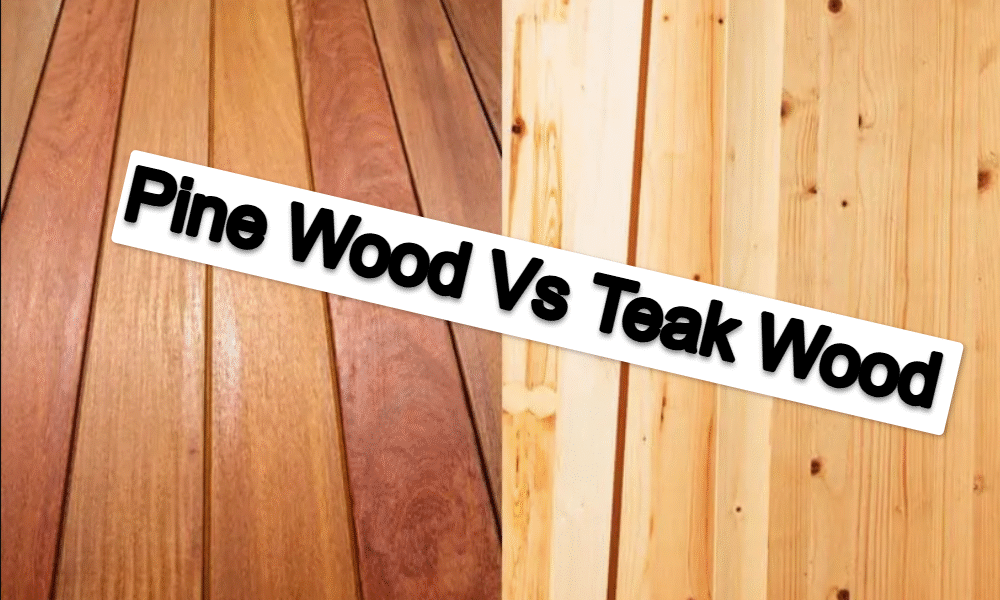
It’s this incredibly flexible and lightweight softwood which has made an impact across the world. One of the things that makes it distinct in the furniture industry is its “feather-light” design, which makes it simple to move around the home. Its appearance is stunning however, it’s not only about the appearance This kind of wood is a hidden star in the field of the field of soundproofing. It’s true it is used in numerous recording studios because of its ability to block out sound.
Pros Of Pine Wood
- Pinewood is most likely to be one of the cheapest woods you can find. It doesn’t matter if you’re a DIYer or an expert craftsman, all it takes is one trip to the local lumberyard and pick up beautiful pine.
- Its beautiful shades of brown and yellow and a rich texture give its wood a distinct appeal. When it comes to handling it, the wood’s flexibility is a joy to work with.
- It’s hard to not appreciate pine’s rapid development, which is faster than many of its hardwood relatives. It’s also an environmentally sustainable wood that’s great for the environment as well as your conscience.
Cons Of Pine Wood
- Despite the many wonderful qualities however, pine wood has its own limitations. One such disadvantage is its inability to be used for outdoor usage. When exposed to extreme weather conditions the pine can deteriorate quite quickly. Its vulnerability to damage due to humidity and its inability endure harsh conditions mean it’s not the ideal material for outdoor furniture and structures.
- As a softwood it is also susceptible to rapid damage. It’s easy to slip up and inflict a small scratch or nick on your woodwork masterpiece made of pine. While it can enhance the rustic look in certain situations, it’s usually something you’d prefer to stay clear of.
- A few people might be able to find the strong scent of pine to be a bit overpowering, particularly for those with allergies. It’s a distinctive scent however it’s not for all. While it is appealing and reminds of a retreat in the forest for some people, it may be too strong. If strong scents aren’t your cup of tea or you’re susceptible to allergies it is important to be aware of when deciding on pine for your next project.
What Is Teak Wood?
Most of the time, it is found in the southeast and south of Asia which includes in the Indian Subcontinent, teak stands out due to its durability as well as its durability. its incredible resistance to decay, dampness, and insects. It’s more expensive than pine, but considering its long-lasting durability and appeal, it’s no surprise that it’s the most sought-after material for outdoor and indoor furniture.
Pros Of Teak Wood
- The reason teak is so durable is its natural oils that effectively create a kind of wood that is special, protecting it from moisture, rot and insects. This is a unique feature that makes it an ideal material to build furniture for outdoor use that is able to withstand the elements.
- If it’s about looks teak does not disappoint neither does it disappoint in terms of appearance. The grain patterns are uniform and distinctive, which ensures the smoothest and most satisfying results after it’s been sanded and planed.
- The toughness of teak is evident in its structural stability as well. It’s not prone to warping or split, so the furniture you love, with just a effort, can be heirlooms to the next generation.
Cons Of Teak Wood
- The primary challenge for teak wood is obtaining your access to it. The over-exploitation of teak forests has made them extremely scarce, which makes the material difficult to locate. Supply and demand comes into play here, causing a rise in cost and making teak an expensive choice compared to different kinds of wood.
- Another disadvantage of teak is the absence of excellent audio characteristics. If you’re considering making an instrument for music or building the recording studio of your dreams it’s possible that teak isn’t the best choice.
- The wood teak also has environmental concerns. The teak tree requires a long length of time, greater than eighty years to mature. This lengthy growth time means that the supply teak isn’t quickly or easily replenished, which raises questions of sustainability and environmental issues.
Conclusion
Overall the two Sal as well as Teak woods offer their own charms and difficulties. Similar to choosing a companion for a long-distance journey choosing a companion will be contingent on what you value the most. Do you want to consider cost-effectiveness or durability, aesthetic appeal or environmental responsibility for you? Understanding these types of wood will surely help you make a well-informed and educated choice.