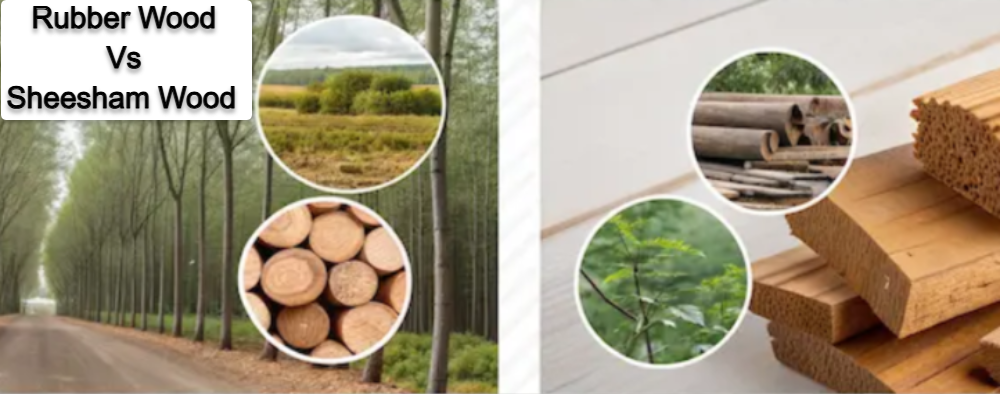

Since the beginning of time wood has been a vital element of the human race. Mankind has come to understand the need for different types of wood for various uses. The industrial revolution has also enabled in the creation of hybrid materials using wood. Nowadays, the need for deforestation has decreased, and wood is cultivated as any other fruit or vegetable. Thanks to Genetically altered seeds, we can now to plant trees more quickly as well as harvest the wood at a comparable speed. When we talk about the various kinds of wood, you might have heard of Sheesham Wood however, a brand new type that is becoming quite well-known is Rubber Wood. So, what’s the difference between them and which one is better? Learn more about the difference between rubber wood and Sheesham wood, in the article below.
Rubber Wood Vs Sheesham Wood: Pros & Cons
What is Sheesham Wood?
Sheesham wood is derived originates from Indian rosewood. The plant is located in the lower reaches of the Himalayas. This is found from Afghanistan up to in the Indian subcontinent. It is also planted in the areas of tea plantation. After harvesting, it’s dried out to lower the amount of moisture and is utilized for various purposes.
Advantages of Sheesham Wood
- Durable HTML0 – Durable Sheesham wood is believed for its durability. It is a heavy-duty wood and can last for a lifetime. After harvest, Sheesham wood goes through an intense drying process that makes it a solid wood suitable to use for home construction. If you’re seeking something durable and long-lasting, Sheesham wood is the right option.
- Easy to carve Some people like carving furniture, which gives furniture a distinct look. In such cases, Sheesham wood is a choice because it is a simple material to work with and is also simple to carve.
- Easy to maintain Easy to Maintain Sheesham wood isn’t prone to insect infestations which means you don’t need to be concerned about treatments or pest control. All you need to do is must wipe the wood clean with a dry and soft cloth.
- Eco-friendly and economically priced Eco-friendly and Economical Indian rosewood is in abundance, which is why sheesham wood is considered to be an economical option. Furthermore, Sheesham wood is harvested from mature trees and a replacement tree is then established after the felling of the previous tree.
- Sturdy Sturdy Sheesham wood is able to withstand lots of abuse. It’s a heavy-duty and sturdy wood, which means that furniture made from Sheesham wood is extremely sturdy. It is the most suitable choice for those who want to preserve the high quality of your furniture.
Disadvantages of Sheesham Wood
- Heavy Because Sheesham wood is very dense and heavy, it’s also heavy. If you’re trying to construct something that is portable it is recommended that Sheesham wood be avoided. It’s not easy moving around and you might want to consider another substitute, such as rubber wood.
- Wasser Damage Water Damage Sheesham wood also has a porous, and as such it is susceptible to some damage if it is left exposed. This could lead to the decay and rotting of wood. The wood is treated correctly at harvest time, and the likelihood of a thorough inspection is not a lot, but you must be sure to protect it from excessive moisture.
What is Rubber Wood?
The wood that is used for making rubber comes through the Para Rubber Tree, and it is a medium density wood. These trees are widespread in areas of rubber plantation and, in general, rubber wood is considered to be environmentally sustainable. In Malaysia the rubber wood is referred to as Malaysian Oak. The wood is treated using chemicals prior to making anything from it. This wood comes from rubber trees which have come to an end point in their lives.
Advantages of Rubber Wood
- Affordable Affordable Rubberwood is regarded as less expensive as Sheesham wood. Therefore, if price is a major factor, we recommend that you go with rubber wood rather than any other. Since it’s a medium density, it’s simple to use.
- Sturdy and DurableRubberwood is strong and durable however, it’s less robust in comparison to Sheesham wood. It is possible to get the highest quality of durability from the rubber wood that is a great value because it’s inexpensive.
- Environment-friendly Environment Friendly As previously mentioned, rubberwood is a result of trees of rubber that have reached the end of their lives, which is why it is a preferred choice over other alternatives. It is considered to be eco-friendly wood.
- Flexible WoodRubberwood is also flexible, therefore, it can be easily shaped or curled with steam and pressure. Because it’s a medium density wood which makes it simple to work with it. But, be aware that rubber wood isn’t able to be cut properly.
- Low ShrinkageThe shrinkage of wood made from rubber is very low and it is generally regarded as stable wood. This is the reason the reason that rubber wood is a sought-after choice for construction as well as other sectors.
Disadvantages of Rubber Wood
- requires chemical treatment –Rubberwood is susceptible to fungal growth and infestation. Therefore, it is important to make sure that the rubber wood you purchase is properly treated.
- Not for outdoor use Not for Outdoor Use Rubberwood is not suited to be used for furniture outdoors. Utilizing it in a damp outdoor area can cause the leaching of the chemicals used to treat the wood. This could lead to insects becoming infested. In addition, you’ll observe the rotting and warping of wood as a result of humidity.
Final Take
This was a quick review of the differences between rubber wood and Sheesham wood. We will discuss the key aspects the rubber wood is cheaper as compared to Sheesham wood, however it is susceptible to infestation by insects. However, Sheesham wood has a higher density and can be used to create stunning designs. In light of the advantages and disadvantages listed in the previous paragraphs, you can pick between the two choices.