
Wood has been utilized in interior and exterior designs since the beginning. The method in which wood was used has changed as a result of technology. Due to advances in the field of manufacturing wood is becoming more efficient for utilities. In time, woodworking has was recognized as a skill.
Two of the most commonly used materials for cabinets, furniture, or other accessories include HDHMR as well as plywood. Buyers and builders are able to make an informed decision by considering the benefits and drawbacks of both. Let’s begin this interesting and informative discussion about HDHMR vs. plywood today.
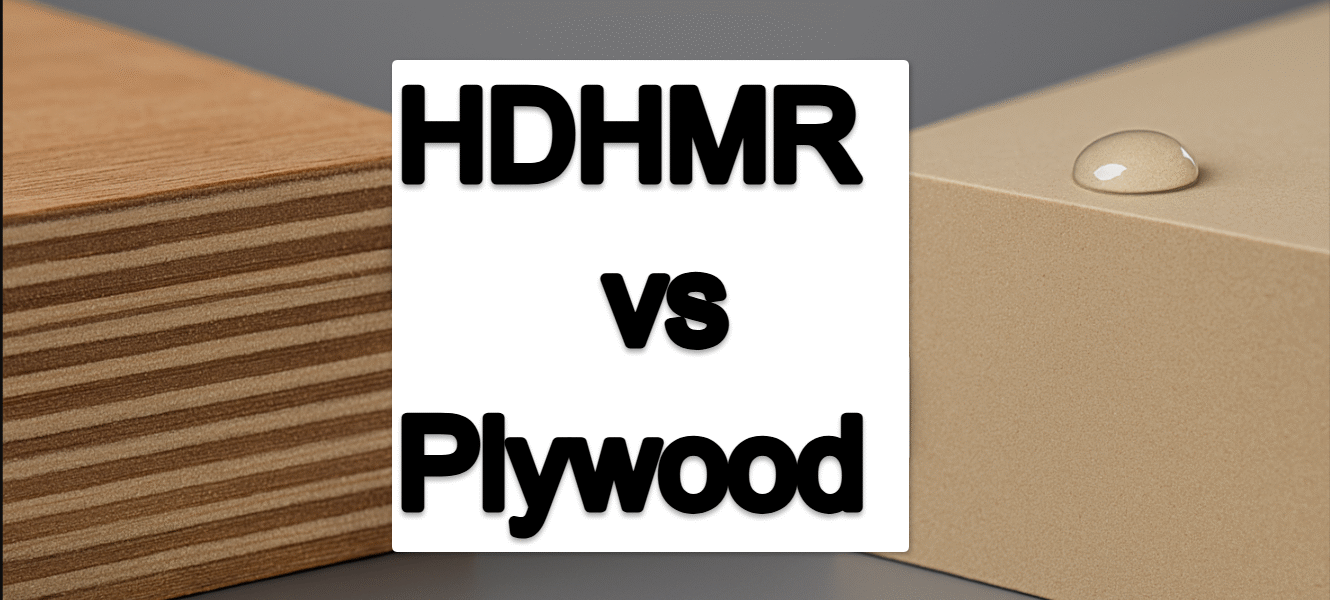
HDHMR vs Plywood
What is HDHMR (High-Density High Moisture Resistance) Board?
HDHMR blends fiber scraps with leftover forest wood into a homogeneous production process. It is a more durable, strong board is created by removing portions of the wood and then chopping the fiber scraps into one layer. The result is a better density when compared with other products made available.
HDHMR has transformed the Indian market for interiors by filling it with plywood due to its exceptional quality and countless possibilities.
Its incredible resistance to humidity makes it a preferred selection in areas with extreme weather. Since these boards are resistant to termite and borer infestations they’re an excellent alternative over plywood. Due to a unique German MAT forming technique, these boards are made with a slim core with a continuous density gradient. They offer the most efficient routing capabilities and a broad range of thicknesses and sizes, that range from 1.9 to 45 mm.
What is Plywood?
Engineered wood also also referred to as plyboard or plywood, is created by gluing thin layers of wood, which are typically bonded with a resin using extreme pressure. It is the quality that determines the ply type of wood selected. Plywood is an amalgamation of softwoods and hardwoods. Additionally, it is more affordable than HDHMR.
The source or origin of the wood has a significant impact on the quality of the plywood. Commercial and residential areas use plywood. Plywood can be cleaned with dry cloths, however it should be kept clear from moisture and light.
Parameters Comparison
Source
- The wood veneer is the basis of plywood.
- The fiber chips and the leftover wood from forests are the main sources for HDHMR.
Structure
- Plywood is a low density and non-uniform material.
- Surface of HDHMR has a uniform high density.
Durability
- HDHMR is more durable than plywood.
- Plywood isn’t as durable as HDHMR.
Infestations
- Termites are more likely be infesting the wood.
- Infestations with termites are more unlikely be a factor in HDHMR.
Resistance to Water
- Water is not able to traverse plywood.
- HDHMR has excellent water resistance.
Main Differences Between Plywood and HDHMR
- As compared to HDHMR plywood is more prone to tension and stress.
- In comparison to HDHMR, plywood is not as popular for interior designers and home-owners.
- The most well-known plywood brands are Duro as well as Greenply. In contrast, Action Tesa is the most popular HDHMR brand.
- While HDHMR provides a smooth surface, a higher density and stability, plywood needs more care.
- One disadvantage of plywood is that it’s more uniform and thicker. However, the heavier weight of HDHMR in comparison to other building materials has its drawbacks.
Strength and Durability
In terms of strength and durability both HDHMR and plywood are a good choice.
HDHMRHDHMR makes a fantastic material for fixtures and furniture due to its high density, which allows it to hold a large weight. Because of its exceptional resistance to moisture, which stops swelling and other damages caused by water, it provides a longer-lasting lifespan.
plywood:Because that of the layering technique employed in its development plywood is well-known for its durability. Its multi-layered structure stops stretching and holds its shape for a lengthy time, owing to its well-balanced stability.
Work with Materials
Materials that last a long time and are simple to use are crucial for the craft of crafting. Let’s look at the results in this section in the case of plywood, and HDHMR.
HDHMR:Due to its high density making and shaping HDHMR requires special tools. Once you’ve mastered it HDHMR provides a smooth surface perfect for veneers and laminations as well as a polished look.
PlywoodThis substance is very easy to mould, install and use. It’s also very flexible. Its bending flexibility is moderate, allowing it to be used in many different applications, such as curving surfaces, which are difficult to achieve with other materials.
Environmental Impact
In the current climate of environmental concerns, it’s crucial to be aware of the ecological impact of the materials we make use of.
HDHMRBy using wood fibres which typically come of wood scraps, HDHMR can be said to be eco-friendly since it encourages recycling and lessens the need for wood products. In addition, waste is eliminated in the manufacturing process of HDHMR.
PlywoodNonetheless the use of hazardous adhesives which release VOCs (VOCs) to the environment can be used in the making of plywood. But, there are efforts underway to minimize the impact on the environment of plywood by making the product using environmentally sustainable adhesives.
Visual Flexibility
Regarding aesthetics every material has distinct advantages.
HDHMRFor diverse finishes such as veneers and laminates, HDHMR provides an uniform smooth surface. Due to its uniformity, interior designers can create an unified design.
PlywoodWith many finishes available, the wood-grain look of plywood is transformed into a visual experience and its natural beauty is emphasized. The ability to shape it into curved surfaces allows designers more room to be creative and ingenuous.
Cost-Effectiveness
Cost is a factor which frequently influences the material selection.
HDHMRHDHMR is an excellent engineered product that’s price corresponds to its durability and quality. But, in the long term it may be more economical because of its durability and low maintenance requirements.
PlywoodPlywood can be found in different prices depending on the grade and type that is selected. While high-quality plywood can be expensive however, there are lower-cost alternatives available with the same high-end quality.
Conclusion
In the end, there is several variables that could be used to differentiate from HDHMR or plywood such as the risk contamination by germs consistency, quality and endurance. The superior performance that comes with Action Tesa HDHMR boards dispels the notion that they’re more pliable and last longer than plywood. For architects, homeowners, as well as interior design professionals, achieving attractive appearance is the most important option.